Table of Contents
Spout cap selection for juice pouches needs a defined decision about opening force and leakage. The issue to investigate is cap relaxation, using the actual product, pouch and operating conditions. This article connects that question to the 9.6 mm catalogue spout and related catalogue structures, with separate evidence for the component and the complete package.
The central comparison concerns closure torque. Start with the application task, inspect the relevant geometry and use a controlled trial to understand the result. A useful spout cap specification explains what was compared, which configuration was accepted and how the supplier can reproduce it.
Define the spout cap application for juice pouches
Define the serving operation before reviewing a spout cap proposal. Juice poured into an open cup creates a different targeting problem from juice transferred into a narrow bottle. Record the receiving opening and the normal starting position of the user’s hand. A neat demonstration into a wide laboratory beaker may conceal a stream that customers find difficult to direct.
Divide the juice family by the properties that challenge the package. Clear juice, suspended pulp and fibrous formulations should have identifiable test samples. Keep the production batch and serving temperature in the record. Do not strain out troublesome particles to make the spout cap comparison easier, because the removed material may be the reason one configuration behaves differently.
Include the nearly empty pouch in the dispensing sequence. Film can fold across the entrance to the neck, and the user’s squeezing motion changes as the pack loses its shape. A spout cap assessment that measures only the first pour may select a configuration that performs poorly during the last serving, even when the rigid opening remains unobstructed.
Understand the spout cap mechanism behind closure torque
Application torque and removal torque describe different events. Thread geometry, cap liner behavior, contact surfaces and storage can change their relationship. Increasing the capping setting can damage threads or distort a soft neck before it resolves the original leak.
Separate the machine’s capping input from the customer’s later opening result. Application torque, thread engagement and removal torque are related observations with different meanings. Compare them on identified spout cap configurations after the relevant storage interval. A higher application setting can distort a soft neck or damage threads, so increasing it should follow evidence about the actual leak path.
Review spout cap structures and the catalogue reference
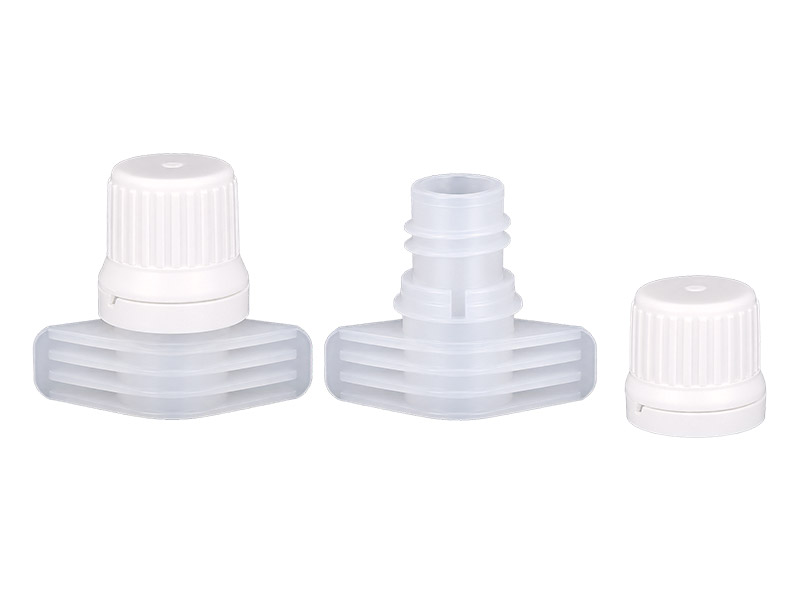
Hongda lists a 9.6 mm spout for stand-up pouches with different cap styles and PE/PP material options. The model is a useful small-neck reference for a spout cap discussion, with the actual bore, locating features and closure confirmed on the supplied sample. The configuration selected for quotation should be identified separately from the options displayed in the catalogue.
The primary reference is 9.6 mm catalogue spout. A related comparison point is 8.6 mm catalogue spout. Confirm the supplied drawings and configuration before evaluating interchangeability.
For juice, separate a restricted stream from a stream that is difficult to aim. The first can require repeated squeezing; the second can spill even when transfer is fast. Review closure torque with the intended cup or bottle and record the user’s stopping point. This prevents a spout cap change intended to improve discharge from being accepted without noticing that the receiving task has become less controllable.
Compare the spout cap configurations for closure torque
Inspect the cap seating and contact surfaces before interpreting a torque reading. Cross-threading, incomplete engagement and product on a sealing surface can create different problems that one overall number conceals. In the spout cap trial, label the cap and neck combination and record the condition of the failed interface. Keep instrument method and sample temperature with the measurement.
| Comparison point | Configuration or condition | Evidence to review |
|---|---|---|
| 9.6 mm catalogue spout | Small nominal neck; listed PE/PP options | Check opening force and leakage on the identified juice package |
| 8.6 mm catalogue spout | Small nominal neck; listed PE/PP options | Check opening force and leakage on the identified juice package |
| 13 mm no-clip spout | Medium nominal neck; no-clip attachment structure | Check opening force and leakage on the identified juice package |
Distinguish product remaining inside the pack from product collecting outside the neck. Weighing the remainder answers an evacuation question; inspecting the cap and threads answers a cleanup and reclosure question. Record both for the spout cap decision. Reducing the first quantity can be a poor trade if it makes the second problem more persistent.
Test the spout cap requirement on complete samples
Label the cap and neck combination. Measure opening behavior immediately after capping and again after the chosen storage conditions. Separate cross-threading, incomplete engagement and relaxation. Inspect the sealing surface before modifying the capping head.
Approve a workable range that supports sealing and accessible opening after conditioning. Compare the same closure assembly across production sources or cavities rather than averaging unrelated combinations. At a cap, liner or resin change, repeat the affected spout cap observations. A retained torque result without its configuration and time history is a weak basis for a repeat order.
The central task is to measure application and removal torque after conditioning. Label the supplied configuration and preserve the starting condition, preparation method and first observation where samples differ. Use that record to investigate cap relaxation, keeping the actual juice pouches use state visible. The test partner and responsible quality team should agree the sample plan and acceptance method.

Connect spout cap results to the use sequence
Treat refrigerated use and the filling process as separate states. The juice may be filled under one controlled process and poured under another temperature condition. Label those states rather than treating a chilled dispensing check as evidence about hot-fill suitability. The spout cap specification should identify which interface properties are being evaluated at each state.
The useful release record connects the formulation, serving task and selected component revision. Retain a filled reference and the receiving-container details alongside the drawing. When pulp content, bottle opening or pack shape changes, revisit the affected observations. This preserves the practical basis of the spout cap choice when purchasing repeats the order.
Diagnose spout cap variation before changing the design
Approve a workable range that gives sealing and accessible opening on actual packs. A single favorable torque reading is weak evidence when several operators, cavities or product-contact conditions are involved.
A clear and a pulp-containing juice can share the same brand and pouch artwork while producing different observations. When their results diverge, keep particle condition, temperature and remaining fill visible before changing the component. For closure torque, compare the relevant limiting formulation with a retained reference and identify the actual path where the difference begins. The spout cap release can then state which product family was evaluated.
| Comparison point | Configuration or condition | Evidence to review |
|---|---|---|
| Component or configuration change | Small nominal neck; listed PE/PP options | Compare the drawing and sample identity at the interface linked to cap relaxation |
| Application or preparation change | Juice Pouches | Compare product, pack state and preparation against the record supporting opening force and leakage |
| Corrective-action verification | Closure Torque | Repeat the relevant trial: measure application and removal torque after conditioning |
A correction should explain the observation it addresses. If the supplied configuration and application both changed, preserve those differences before interpreting the result. For spout cap release, the supporting record should connect opening force and leakage to the actual component, film and use state, with the failed sample available when it helps locate the cause.
Build the spout cap RFQ and repeat-order brief
Provide the juice pouches task, the current component and pouch drawings, material information and the evidence required for closure torque. Ask the supplier to identify the supplied closure or attached assembly and any deviation from the brief. Keep recurring unit cost, tooling, development, packing and delivery assumptions distinguishable so quotations describe the same usable configuration.
At approval, retain the identified samples and the records that establish opening force and leakage. Link the purchasing reference to the accepted drawing and material revision. At reorder, review changes that could alter cap relaxation or the conditions of use, then repeat the affected evaluation. This makes the spout cap decision reproducible when another batch reaches the line.
For a relevant external reference, consult the FDA guide to food-contact material components. Use the source to frame the applicable product or test discussion with the responsible team. The component comparison above remains tied to the identified catalogue configuration and the project conditions; it does not represent a supplier certification or a reported production trial.
Discuss your packaging project
For spout cap sample discussions, send Hongda the juice pouches product and pack details, your drawing and the closure torque requirement. Include the observations needed to establish opening force and leakage. Review the Plastic Spouts catalogue or contact the team to define a relevant sample and quotation brief.
Frequently asked questions
What should a spout cap buyer define for juice pouches?
Define opening force and leakage and the conditions where cap relaxation would be observed. Preserve the product, pouch, component revision and test method so the result describes an identifiable configuration.
How does closure torque affect the spout cap comparison?
Application torque and removal torque describe different events. Approve a workable range that gives sealing and accessible opening on actual packs.
Which spout cap catalogue structures are relevant?
The 9.6 mm catalogue spout is the primary reference here, with the 8.6 mm catalogue spout as a related comparison. Confirm the actual drawing, supplied configuration and material before treating the samples as interchangeable.
How should the spout cap trial be run?
For the central comparison, measure application and removal torque after conditioning. Use the actual juice pouches conditions, keep an identified baseline and record the first repeatable difference instead of changing several inputs without a traceable plan.
What changes require another spout cap check?
Review changes to material, component geometry, attachment, product or operating condition that could affect opening force and leakage. Repeat the affected evaluations and retain the earlier approval as the comparison baseline.